How to Find Rare Answers in Dig Deep
Finding rare answers in Dig Deep requires obeying every word of the prompt while stepping away from textbook examples. You want an answer that clearly belongs inside the category rules while remaining far enough outside everyday conversation that most players overlook it under time pressure.
Breaking Down Category Constraints
Many rounds narrow a broad subject with a secondary rule, such as an initial letter, a political status, or a scientific classification. Before you think about rarity, confirm what the prompt actually demands so you do not waste a turn on a near miss.
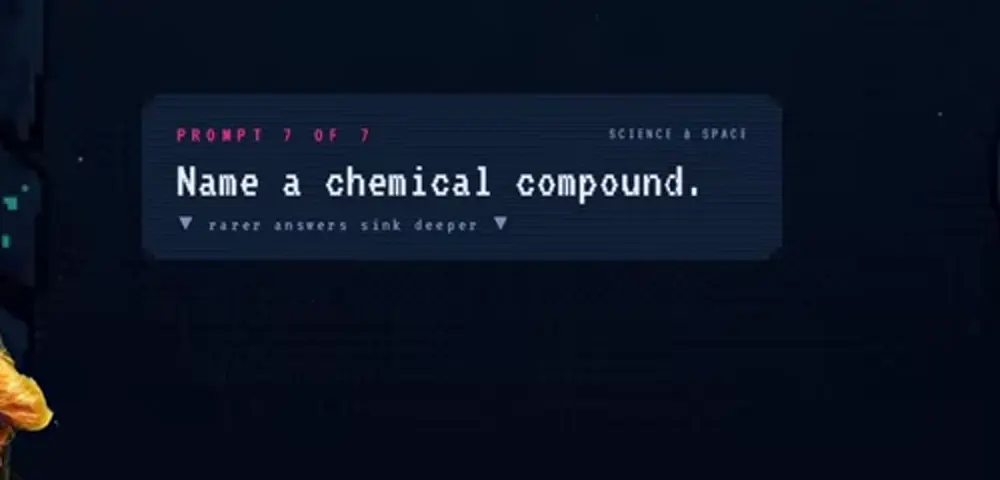
In recorded gameplay from the earlier build, a prompt asking for a chemical compound led a player to try aluminum and iron, while another prompt asking for a capital city starting with T saw Toronto rejected before Tokyo was entered. Those recordings reflect that single session instead of a promise of current scoring, yet they illustrate how a chemical element or a city outside the intended capital category can fail a strict definition.

Using an Editorial Two-Step Pivot
When a prompt appears, your brain usually supplies the most famous global example first. Instead of typing that headline answer immediately, use it as a stepping stone to a smaller neighbor in the same group.
For instance, if a category asks for a geographic location or a sports nation, shift your thinking from massive capitals or championship giants toward smaller sovereign states, historic regional settlements, or secondary tournament regulars. In that same recorded session, entering Mumbai for a city prompt yielded a modest gain while St. Augustine produced a much stronger result, showing the value of pivoting away from megacities.
- Identify the exact noun the prompt wants, such as a national capital, a compound, or a stage production.
- Discard your first instinctive answer if it is a world-famous default taught in every introductory class.
- Select a shorter, easily spelled alternative from a smaller region or a less publicized subset.
Balancing Obscurity Against Spelling Speed
An ultra-obscure answer only helps when you can enter it accurately before the round closes. Extremely long multi-word titles or unfamiliar foreign spellings increase the chance of a typo when you are rushing.
As an editorial rule, choose an answer whose spelling and category membership you can explain confidently. Word length alone does not make an entry rare. If your unusual choice feels uncertain, keep a simpler valid alternative ready and use the remaining time to check the exact wording of the clue.
Make a practice notebook with three columns: the full prompt, your intended answer, and what happened on screen. Copy the entire constraint instead of shortening it to a subject such as cities. A rejected entry deserves a different review from a low rarity result. First check the definition and spelling; then decide whether a valid response needs a less familiar alternative.
Building Category Habits Over Answer Lists
Memorizing a fixed cheat sheet of words is a poor approach because prompts shift qualifiers such as starting letters or regions from match to match. A static list cannot cover every wording variation you will face across a session.
The complete accepted-answer database and the exact rarity calculation are not verified publicly, so focus on organizing your own mental catalogs by continent, art form, and science class instead of hunting for guaranteed magic words.